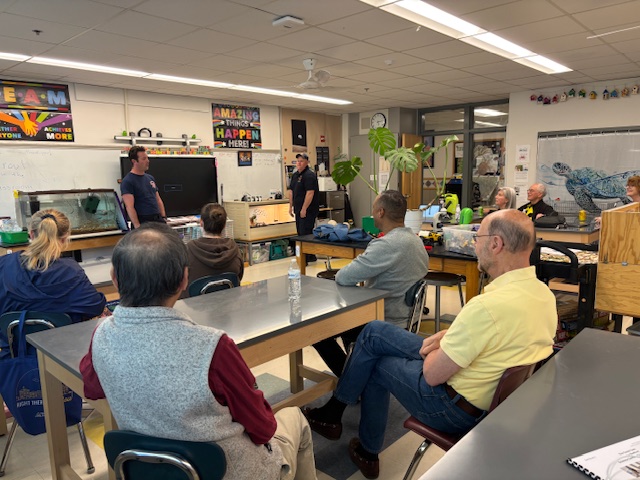
 On May 1, from 5 to 7 PM, a group of dedicated volunteers from the Bedford Science Center, including Ralph, Al, Victor, and several others, gathered at the Lane School's Science Center room for critical life-saving training. Assisting them were two Bedford EMT staff members from the Fire Department—one of whom, in a full-circle moment, was once a student of Ralph’s when he taught fifth grade at the former Bedford Center School, now the site of the Council on Aging.
 Over the course of the two-hour session, participants received up-to-date instruction on CPR and emergency respiratory response techniques, focusing on how to act quickly and effectively in the event of cardiac arrest. The training underscored a vital truth: in Bedford, it takes an average of 6–8 minutes for an ambulance to arrive, so what bystanders do in those crucial first few minutes can determine whether a life is saved.
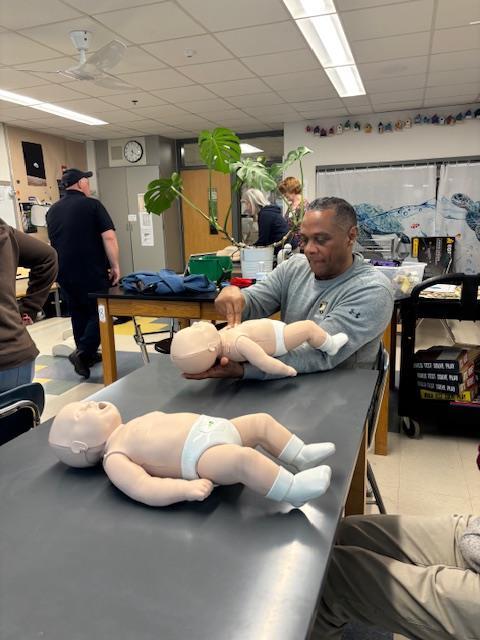
Volunteers learned how to assess a situation by checking for a pulse and signs of breathing, call 911 promptly, begin CPR, and use an AED (automated external defibrillator). The training also covered key differences in procedures for adults, children, and infants, ensuring the group is prepared for a range of scenarios.
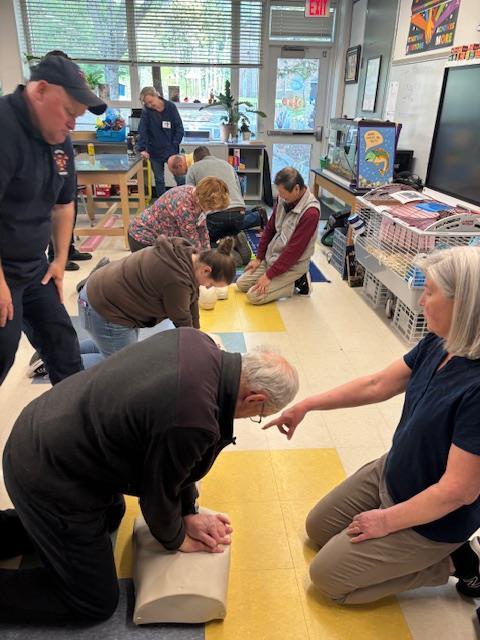 Hands-on practice was conducted using instrumented adult and infant dummies. A memorable tip from the session: perform chest compressions to the beat of the Bee Gees' song “Stayin’ Alive,” which has the ideal rhythm of about 100–120 beats per minute—roughly two compressions per second. Instructors emphasized the importance of performing compressions on a firm surface and maintaining proper hand and arm posture for effective results.
Thanks to this training, the Bedford Science Center volunteers are now better equipped to respond in emergencies, potentially making the difference between life and death in their community.