 Twenty-five years ago, the Rotary Club of Bedford helped plant the seeds of a powerful educational movement in Damauli, Nepal. With the introduction of the Rotary Concentrated Language Encounter (CLE) literacy methodology and support in launching a new Rotary Club in Damauli, the foundation was laid for an enduring partnership built on the shared values of education, community, and service.
CLE stands for Concentrated Language Encounter, a methodology very similar to what was being implemented at Davis School in Bedford during that time. The connection between Bedford and Nepal began in February 1993 when Bindu Tuladhar, the principal of the Bijeswori School in Kathmandu, visited Davis School. As she was preparing to leave, some Davis students asked what they could do to help the students at her school. When she mentioned that many students in Nepal couldn’t even afford underwear, the children responded with empathy and action.
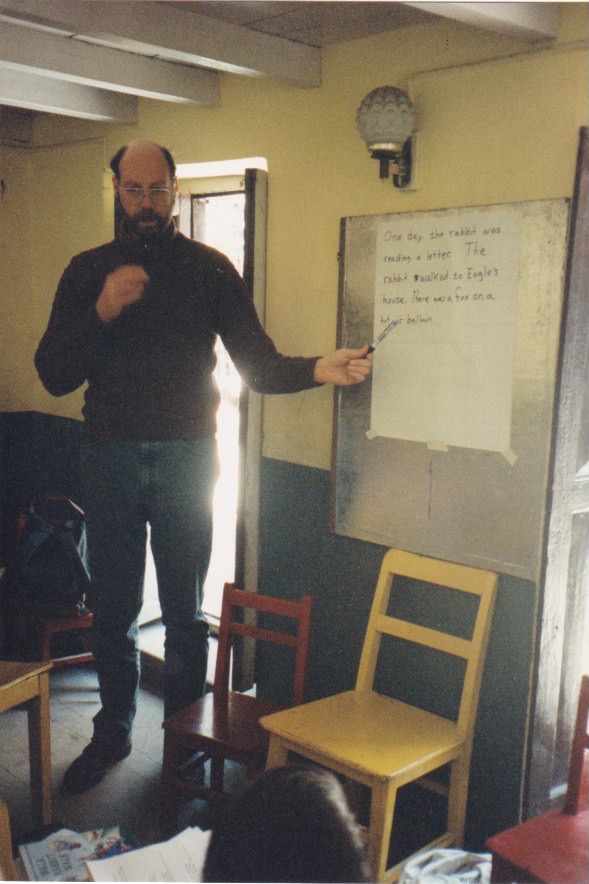 Under the leadership of Mrs. Davies' first-grade class and Mr. Bennett’s second-grade class, the students launched a campaign called the “Underwear Express.” They collected nearly 300 pounds of children's underwear. Rotary stepped in to help fund the overweight baggage fees for Ralph Hammond, who took the supplies to Nepal during his April school vacation. That trip completed a principal exchange and marked the beginning of an extraordinary international partnership.
The first CLE training sessions were held at the Bijeswori School and at a shelter for street children — and it quickly became evident that the approach worked well. True to Rotary’s philosophy of starting in places where success is not guaranteed, the methodology was then introduced in Damauli, a more remote area with limited resources, but also the site of a newly forming university.
At the time, becoming a teacher in Nepal only required completing grade 10, and many educators — some of whom could not read — taught in the same rote fashion in which they had been taught. Literacy rates, especially among girls and women, ranged from 10 to 12 percent.
Through additional Rotary Foundation grants, the university in Damauli led a nationwide CLE training program. Even the Prime Minister of Nepal participated, handing out certificates to graduates. The rapid rise in literacy in Damauli made CLE the national literacy methodology. The formation of the Rotary Club of Damauli and its connections to other Rotary clubs played a key role in maintaining and spreading this success. Ralph returned to Nepal many times over the years to meet with clubs and Rotary leaders supporting CLE’s continued growth.
Today, that same spirit is alive and well — not only in Nepal, where the Rotary Club of Damauli celebrates its Silver Jubilee, but also back in Bedford, where those early lessons are shaping a new generation of learners in a thoroughly modern way. Ralph , a past president of the club and former Rotary District Governor, recalls those early days with deep appreciation. “The students in Nepal taught me something I’ve never forgotten — that real learning happens when we share what we know, when we teach and mentor others. That insight changed the way I think about education.”
Ralph, who helped bring CLE to Damauli, is now helping reintroduce those same principles at the Bedford Science Center — a vibrant, volunteer-driven initiative housed in Lane Elementary School. The center gives students hands-on science experiences, but it also aims to shift how they learn and how they share what they’ve learned.
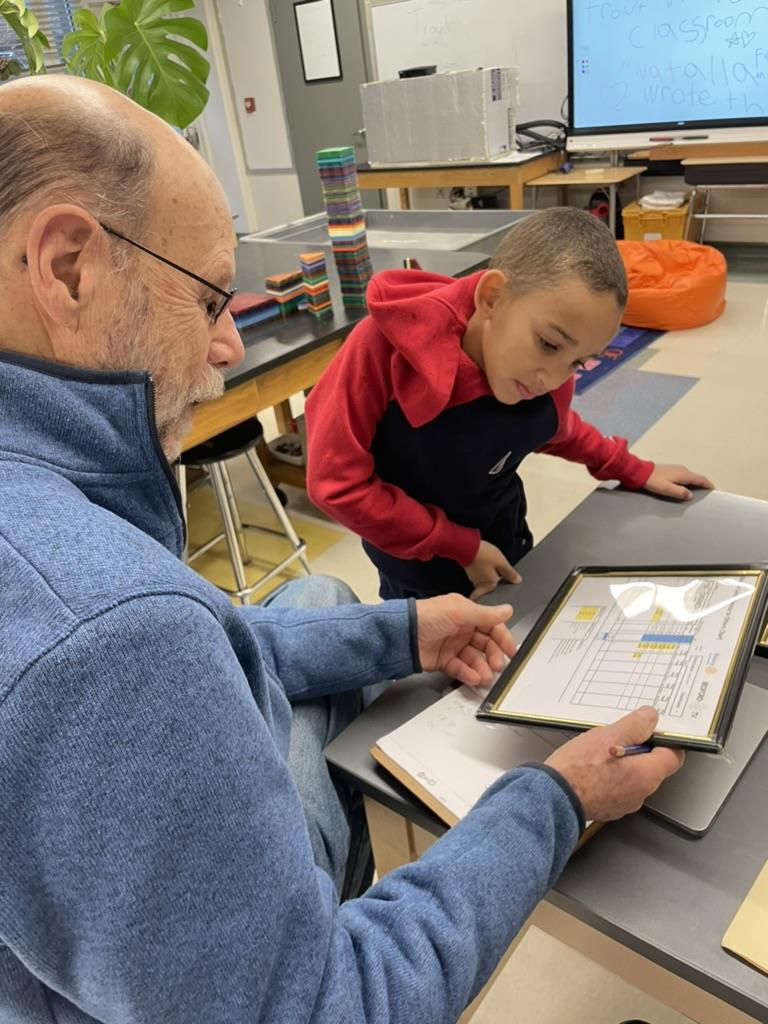 One example is the story of Justice, a third-grade student who was continuing to build his reading skills when he first got involved with the Science Center. His curiosity was sparked by real-world science phenomena, and his love of learning deepened through experiential, student-led discovery.
He was paired with Ben, a fifth grader who had been volunteering at Bedford TV and had developed skills in video production, editing, and storytelling. Together, the two students created what they call a “tiny book” — a short science story written and illustrated by Justice. With Ben’s help, that book was then transformed into a video that could be shared with other students online. “I told Justice that the best part about science is sharing what you learn,” said Ralph. “And he ran with it.”
The equipment used for filming and editing — including computers and cameras — was made possible thanks to a grant from the Bedford Rotary Foundation. That support helped make this student-led, experiential learning project not just a fun opportunity, but something that could extend beyond the classroom walls.
The process of creating, sharing, and mentoring aligns with the Bedford Science Center’s larger goal: helping students move beyond rote learning and engage deeply with the material. “When students teach others, they remember more, understand better, and build confidence,” Ralph explained.
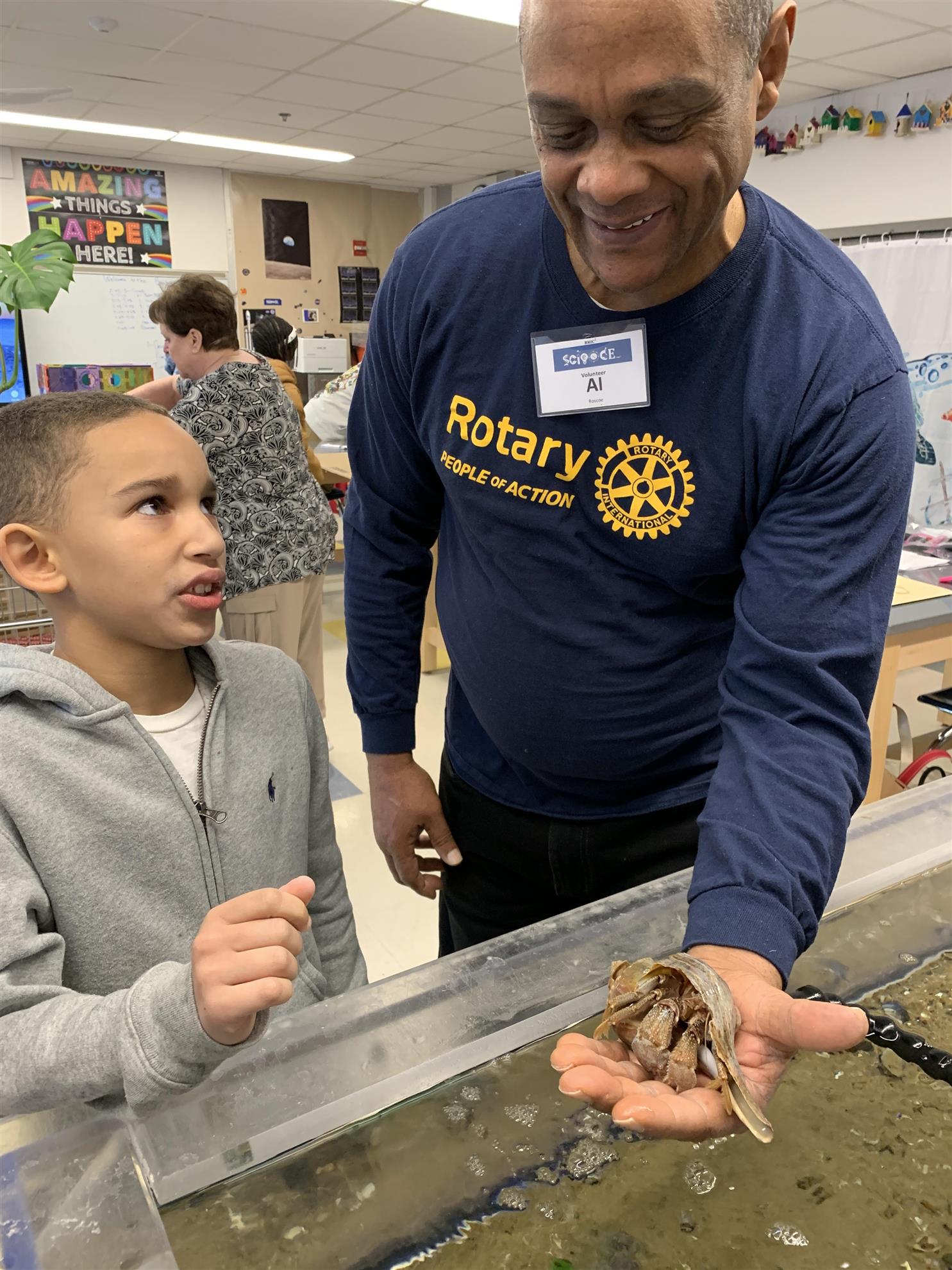
This summer, students and volunteers at the Science Center are continuing to explore the science of reading skill development and are working on new content that builds on the tiny book project. The goal is to create more opportunities for students to learn by creating, sharing, and teaching.
Looking ahead, Ralph envisions reconnecting with schools in Damauli to create an international exchange. “Wouldn’t it be wonderful,” he says, “if students in Bedford and students in Nepal could share their tiny books with one another? Maybe even create some about the Bhanu Peace Park — a project that ties our histories together.”
Though health challenges now keep him from traveling, Ralph remains deeply connected to Damauli and to the people who made such an impact on his life. “The video of Nepal still plays in my mind like a favorite movie,” he says. “It reminds me how truly special those early days were — and how much promise there is in continuing this work.”
From a student campaign called “Underwear Express” to a national literacy movement, and from a science center in Massachusetts to classrooms across Nepal, CLE continues to prove that ideas rooted in compassion, service, and education can span decades, cross continents, and transform lives.